Human-Centered Design: Designing for the “Edges” to Benefit the Center
Philosophy: Empathy-Driven Innovation
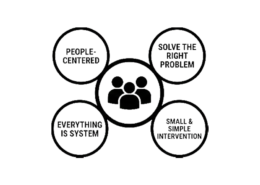
I view Human-Centered Design as the practice of radical empathy. It is the belief that by identifying and solving for the most significant barriers faced by individual learners, we create a more robust and intuitive experience for the entire population. My approach transcends traditional “student accommodations” to embrace a model where accessibility is the catalyst for innovation, not an afterthought.
Tangible Learning & Sensory Design
I specialize in co-designing learning instruments that engage multiple senses, moving content from the screen into the physical world to accommodate diverse learning needs.
-
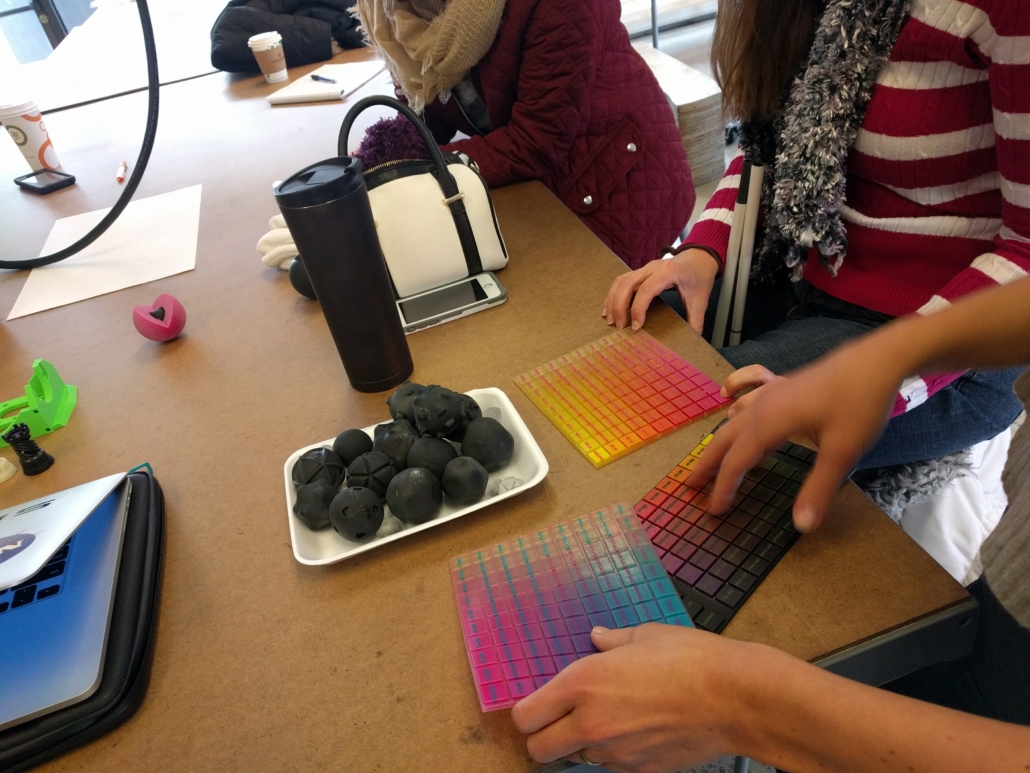
Tactile Graphics & STEM: During my time as an Assistive Technology Specialist, I recognized that complex STEM concepts are often best understood through touch. I partnered with faculty to create tactile graphics and 3D-printed models to make abstract data tangible.
-
Advanced Fabrication: Utilizing tools like 3D printing and laser engraving, I have developed learning aids—including components using Braille—that augment the educational experience for both sighted and non-sighted learners.
Transforming Accommodations into Universal Assets
A hallmark of my work is the ability to take a personalized learning solution and scale it into a systemic benefit.
-
OER Advocacy: I have assisted faculty in transitioning from traditional textbooks to Open Educational Resources (OER). What often begins as a request for an accessible text format frequently evolves into a UDL initiative that removes financial barriers for the entire student body.
-
Removing Systemic Barriers: By redesigning courses to align with UDL practices, I focus on removing barriers to entry, including cost, physical access, and digital literacy requirements.
The Interconnectedness of Access
In a world where “anyone can learn anything,” my goal is to ensure the architecture of that learning is inclusive by design. Whether I am redesigning a curriculum or implementing a new technology, I ask: “Who is being left out, and how can we design a bridge that benefits everyone?” By centering the human experience, I ensure that equal access is not just a policy requirement, but a foundational pedagogical strength.
The cool thing about thermal paper is how versatile it can be, the process makes you feel like you are baking bread (without the delicious smell). This picture is part of a series of STEM related diagrams I designed for students that were low vision, braille readers at the University of Colorado, Denver. The image below is a 3D representation of cerebellum tissue, the black ink rises when exposed to heat, allowing different types of edges and tactile experiences.
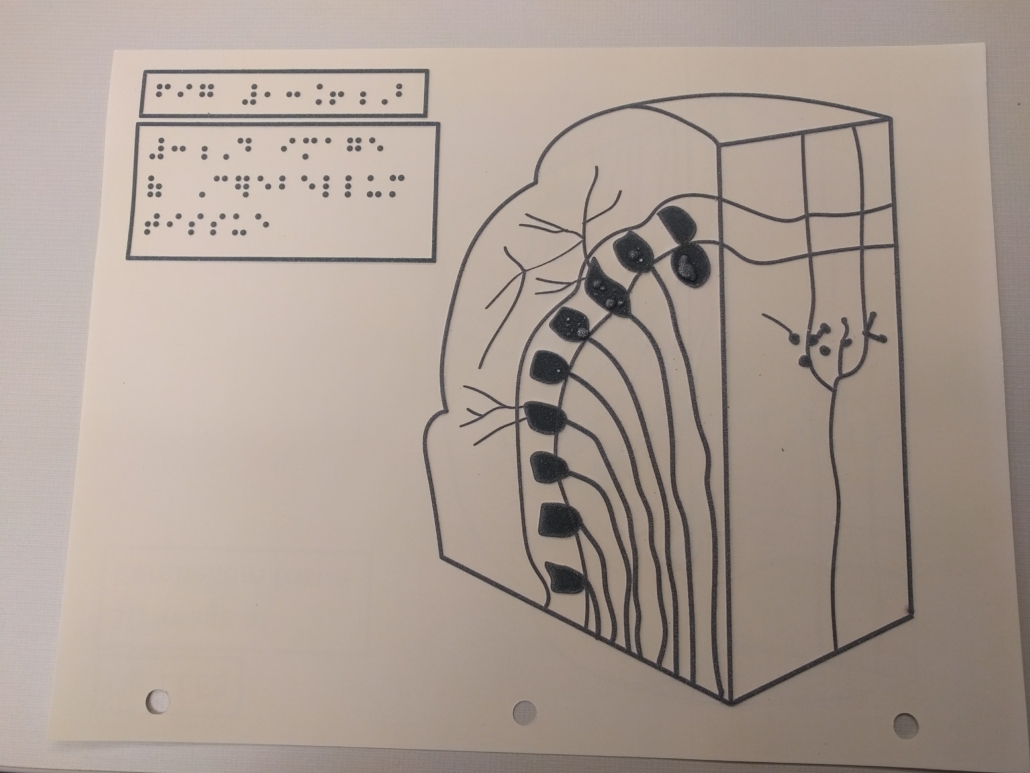
Another nice thing about being creative in STEM is also going outside traditional learning environments. I have also collaborated with 3D modelers to create personalized experiences for students with accommodations. In turn, this allowed for a repository of 3D STEM assets to be collected for future use of all students.
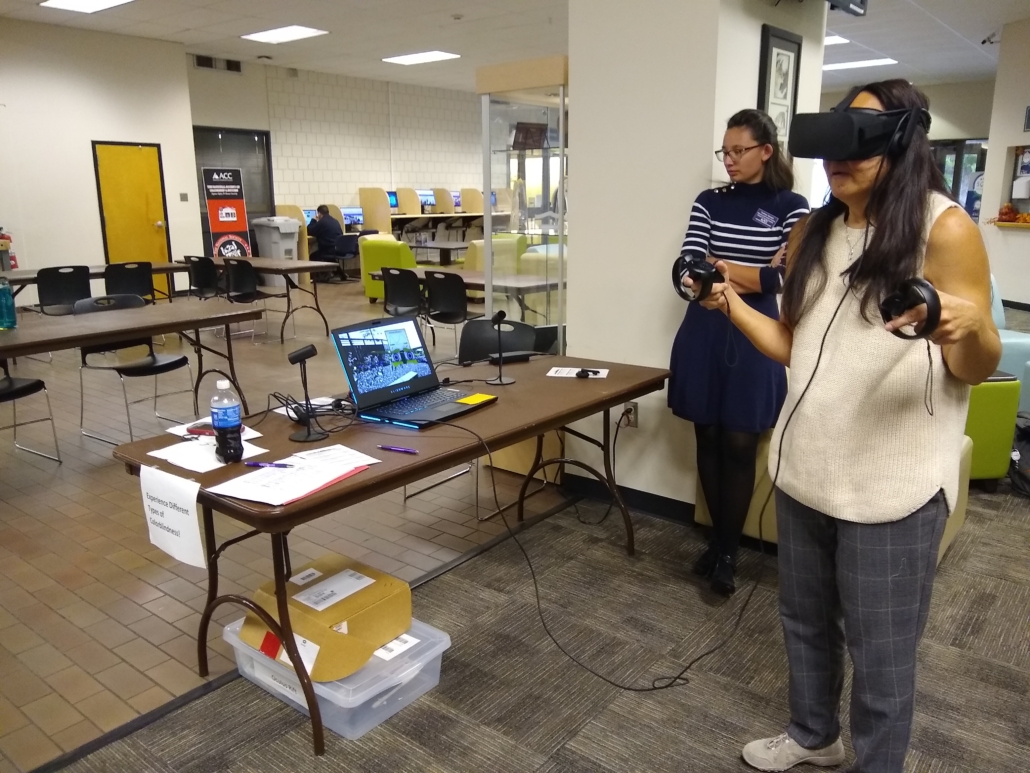
Whenever possible I like to leverage technology to illustrate different perspectives and experiences. One tool I have used in the past to provide people with an understanding of human centered design is virtual reality. For example, for one of the accessibility events I helped manage we setup a VR station that allowed people to experience different types of color blindness. This was an eye opener for most people and it allowed conversations to surface past accommodations, but rather how do we embed a human centered approach in everything that we do. Below is an image of a one of my colleagues using VR to play “Experience Colorblindness“.